 Expert Irrigation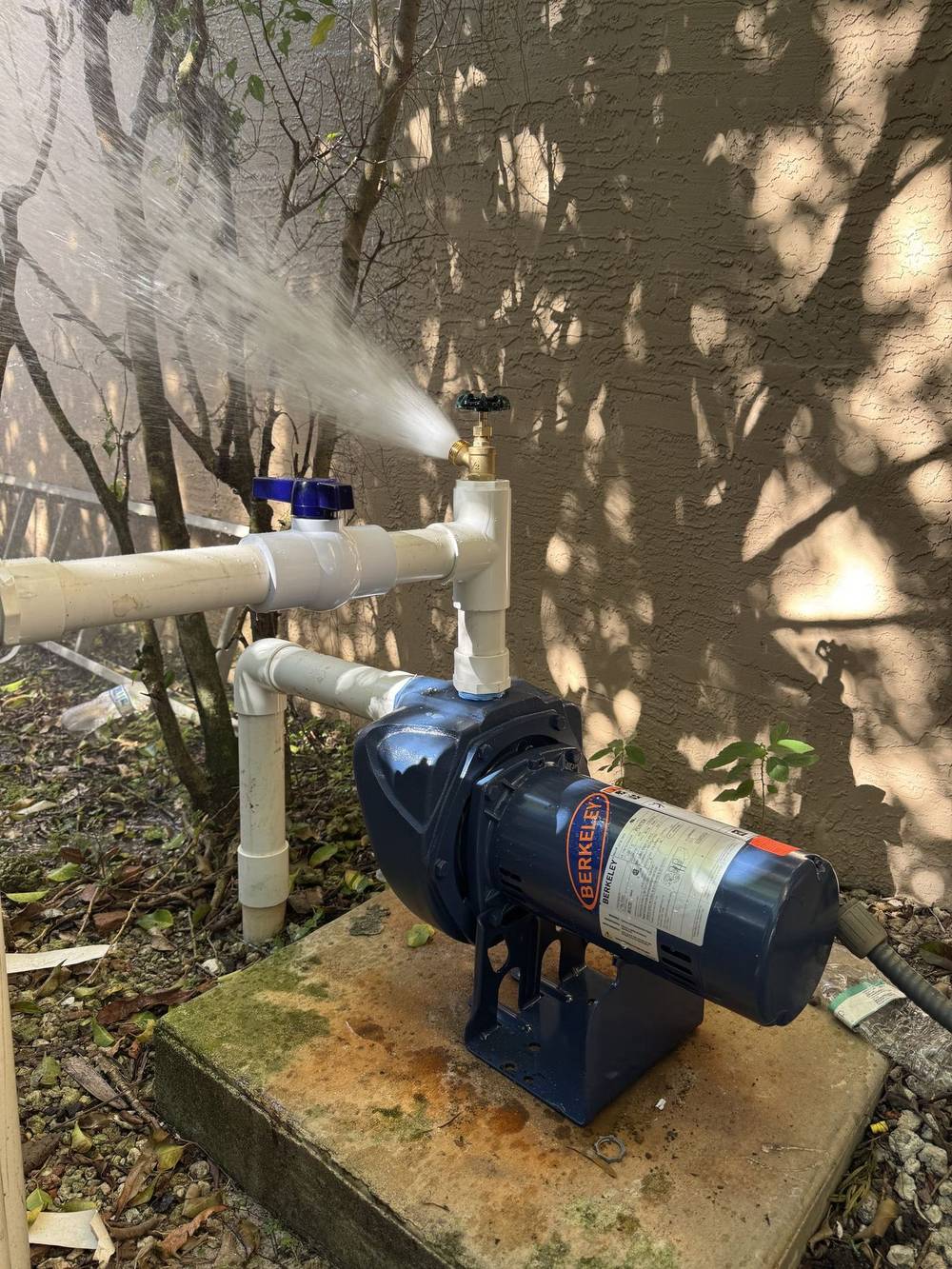
A large share of Broward's older single-family neighborhoods irrigate from a shallow private well rather than city water. It is a sensible setup — the water table here sits only three to ten feet down, so the water is cheap to reach — but wells bring their own failure modes, and most irrigation companies would rather replace heads than diagnose them.
Wells are not exempt from the watering rules
This is the most widely believed myth in the county and it is simply wrong. The South Florida Water Management District rule applies to all landscape irrigation from all water sources, explicitly including private wells and private connections to canals, lakes, and ponds. The reason is that surface and groundwater here are the same connected system — keeping water in the canals is part of what holds back saltwater intrusion. If someone told you the well makes you exempt, they were mistaken.
Lost pressure that came on gradually
A well that has slowly weakened over eight to twelve years usually has a fouled intake, not a dying pump. Because the aquifer is limestone and the groundwater carries iron and manganese, screens and open-hole intakes incrust over time. Redevelopment — overpumping in stages, backwashing, mechanical surging — often restores a well that a replacement quote said was finished. Acid treatment of a limestone formation requires water management district approval, and we will tell you when that is the honest answer.
Pressure that dropped suddenly, or a pump that runs but delivers nothing
Usually lost prime, from a leaking foot valve or a suction-side leak. Sometimes the well drew down below the intake during dry-season low water — March through May is when marginal wells start sucking air. Pressure switches and start capacitors also fail regularly here, because Broward pumps are almost universally mounted outdoors, unshaded, in heat, humidity and salt air.
Sand in the system
A damaged or undersized screen, or a well that was never properly developed, pumps fine sand. The damage moves downstream in a predictable order: pump impeller wear, then clogged nozzles and filters, then scored valve diaphragm seats, then zones that will not seat and weep after shutoff. If you are replacing valves every year, the well is the problem.
Rust staining on the driveway and walls
Dissolved iron above 0.3 parts per million will stain, and Broward groundwater commonly runs well above that. It oxidizes on contact with air in roughly thirty seconds, which is to say it turns to rust between the nozzle and the concrete. Options in the order we recommend them: adjust arcs and relocate heads so well water never lands on concrete or stucco; then, if that cannot fully solve it, chemical injection — chlorine at around one part per million, or acid injection to hold iron and calcium in solution. For existing stains, sodium hydrosulfite works best.
Sulfur smell
Hydrogen sulfide from sulfate-reducing bacteria in low-oxygen groundwater. It is a nuisance rather than a turf problem, most noticeable at first morning start-up and in screened patios, but it does accelerate corrosion on copper and steel components.
Coastal wells and salt
In eastern Fort Lauderdale, Pompano Beach, Deerfield Beach and the barrier island communities, saltwater intrusion is a live and moving condition — the front advanced as much as half a mile inland between 1945 and 1993, and monitoring near the Peele Dixie wellfield still shows landward movement. A well that was fresh twenty years ago is not guaranteed fresh today. Irrigation water should stay under 70 ppm chloride; past that you start seeing leaf burn and accelerated corrosion. Testing an existing well's chloride and conductivity is cheap and worth doing if your landscape is declining for no obvious reason.
New wells
Every water well twelve inches in diameter or smaller in Broward County requires a permit from the Florida Department of Health, and must be constructed by a licensed well driller. Single-family homes and duplexes do not need a separate SFWMD consumptive use permit, but the construction permit and licensed driller still apply. Plenty of wells in this county were put in without either.