 Expert Irrigation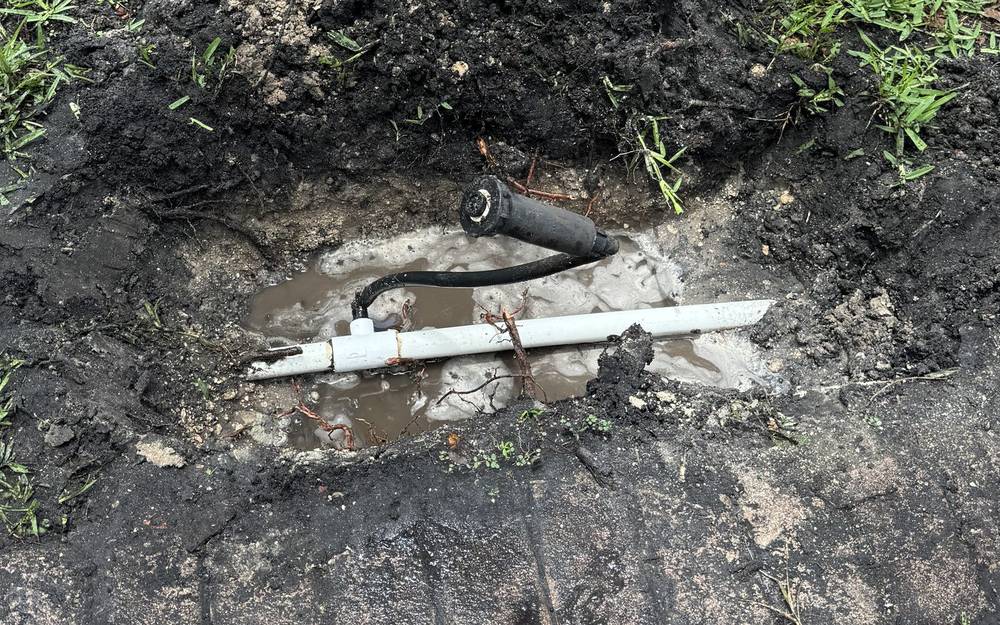
Most sprinkler repair calls fall into a handful of patterns. Knowing which one you are looking at before digging is the difference between a one-hour visit and an afternoon of guessing.
A zone will not come on at all
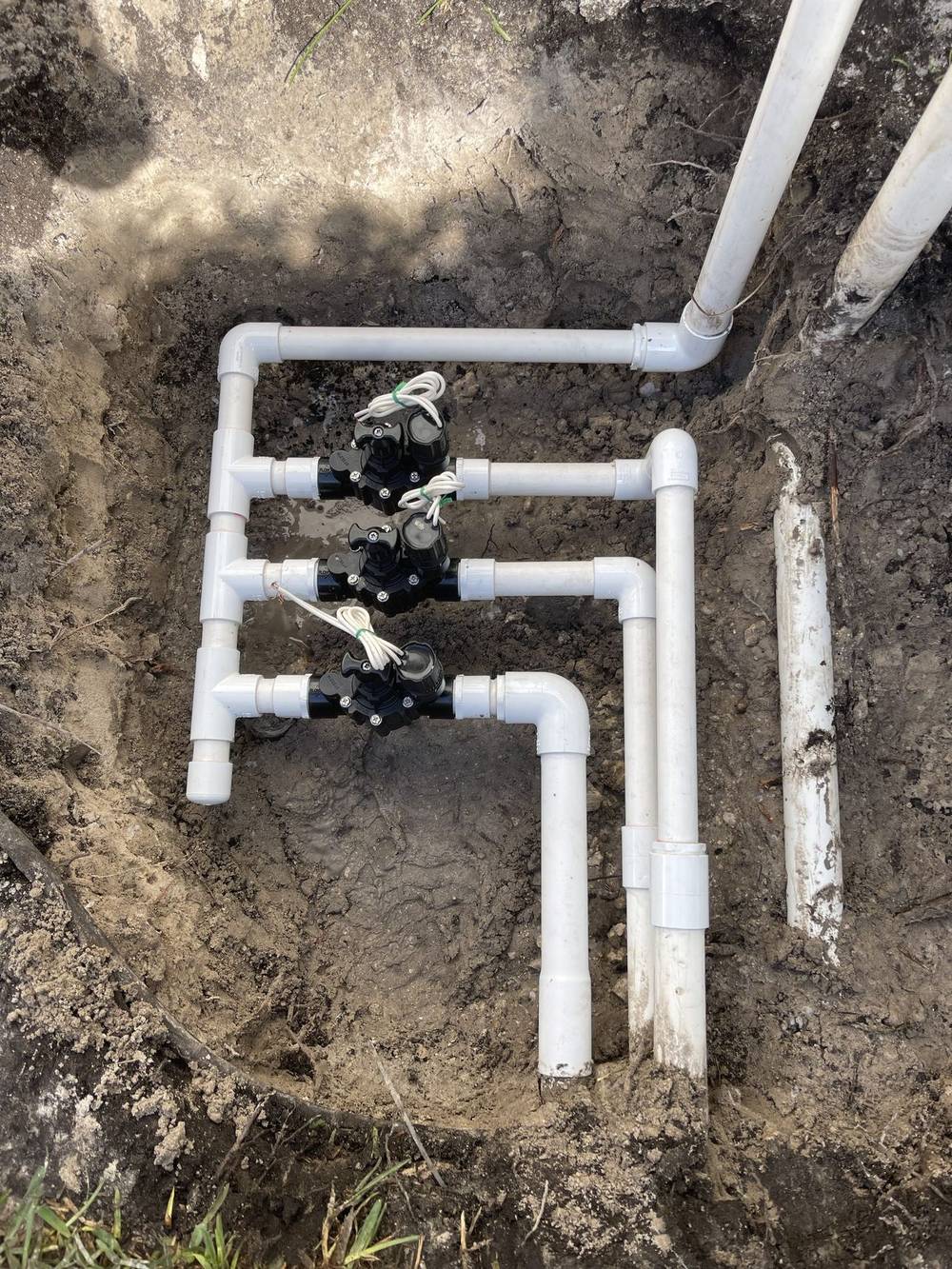
Three usual causes: a failed solenoid, a broken wire, or a controller output that no longer fires. A healthy solenoid reads somewhere in the range of twenty to sixty ohms. Open circuit or near zero means the coil is gone. If several zones died at once, especially after a summer storm, suspect the controller or a damaged common wire rather than the valves themselves — a nearby lightning strike induces voltage on the underground valve wiring, and the field wires act like an antenna.
A zone will not shut off, or heads weep after the cycle ends
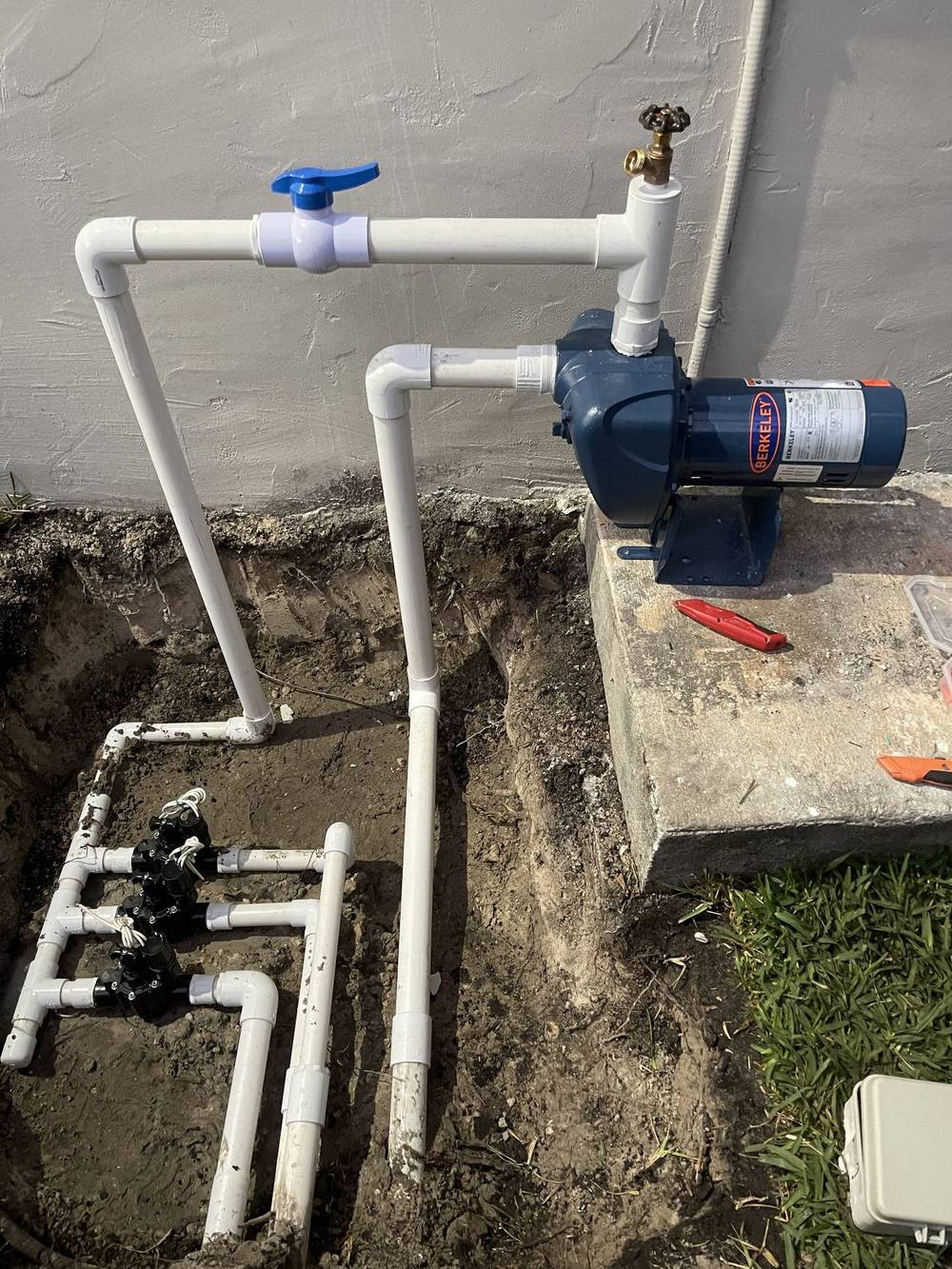
That is usually the valve diaphragm. In Broward the valve box sits in full sun with soil temperatures well above air temperature, and the rubber hardens and loses its seal. Grit is the other culprit — if the system runs off a well that is pumping fine sand, the sand scores the diaphragm seat. When we see several zones weeping at once and gritty filter screens, we look at the well before we look at the valves, because replacing four diaphragms fed by a sanding well just buys you a year.
Weak spray, short throw, or a rotor that stopped rotating
The Biscayne aquifer is limestone, so the groundwater here is genuinely hard. City water gets lime-softened at the plant. Well water gets none of that, which is why calcium crusting on nozzle orifices and rotor screens is markedly worse on well-fed systems. Spray heads clean by pulling the riser and rinsing the filter; rotors have a basket filter under the top cap. When a replacement head is needed, it has to match the existing operating pressure, throw radius, and arc, or the zone ends up unbalanced.
Wet spots, sinkholes in the turf, or a pressure drop across the whole system
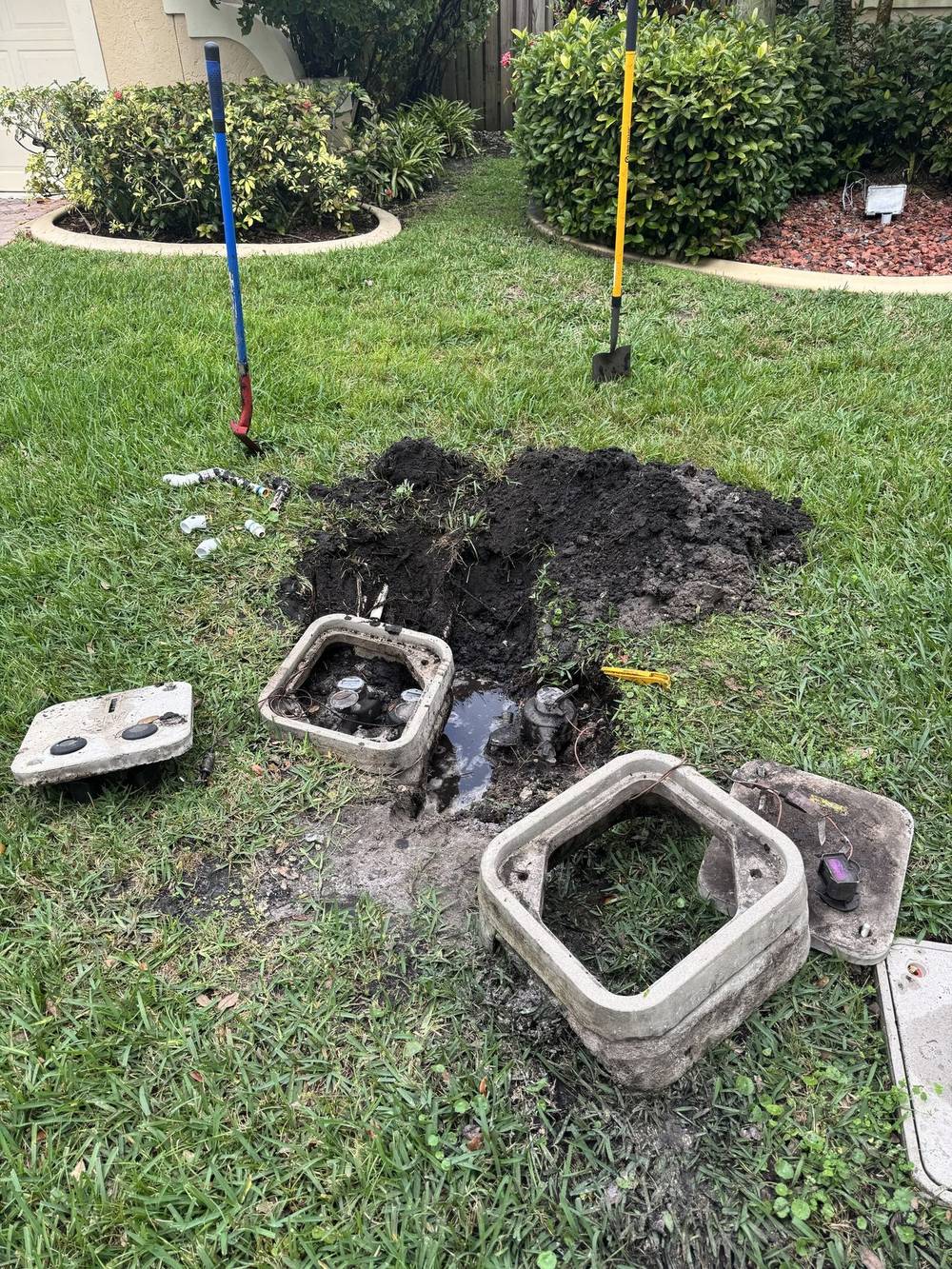
A broken lateral. Because Broward laterals often sit shallow over caprock, the usual causes are mechanical — an edger, a fence post, a shovel — or root intrusion. Ficus and banyan are the repeat offenders. A proper repair cuts back four to five inches past the break on both sides, primes and cements, and gets about an hour to cure before the zone is pressurized again.
Overspray staining your driveway rust orange
That is dissolved iron in well water. Groundwater here runs anywhere from 0.1 to 7 parts per million, and staining starts above 0.3 ppm. The iron leaves the well dissolved and invisible, hits the air in the spray, and oxidizes into rust in about thirty seconds — meaning it converts in flight, between the nozzle and your driveway. Chemical injection systems exist and they work, but the durable first fix is head placement and arc adjustment so that well water never touches concrete or painted stucco in the first place. We will always try the geometry before selling you a chemical.
Your rain sensor
Florida law requires a working rain shutoff device on any automatic irrigation system. Most of the ones we find are dead. The common expanding-disk type needs its disks replaced at least every two years and should be tested annually — spray it and confirm the system stops. Set the threshold as low as it goes, an eighth of an inch on most units. We check yours on every visit at no charge, whether or not that is what you called about.
How we work
We diagnose first and quote before we start. The diagnostic visit is $89 and it is credited in full against the repair if you go ahead — so you are paying for a diagnosis, not for a guess. If you decide not to proceed, you keep the written findings. We take card, check, cash, Apple Pay, Venmo, and Zelle.